The ocean has always been the best teacher. It looks calm one moment, violent the next. It gives and it takes, without warning or apology. And lately, I’ve felt like I’ve been living inside its tides.
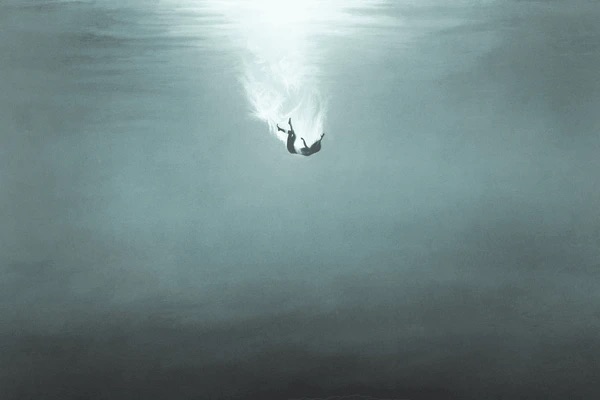
Life came in like a rogue wave. One I didn’t see coming, one that knocked me off my feet and dragged me under. You think you know how to swim until you’re pulled into depths you never wanted to enter. Until your lungs burn. Until the surface feels too far away.
That’s what it’s like when everything shifts at once. You’re not just riding waves anymore — you’re drowning, surfacing, gasping, then pulled under again. The days blur together, like waves crashing one after another. And all you can do is survive the set, hoping you’ll find a pocket of calm before the next one hits.
The outside world doesn’t see it. On the shoreline, life looks the same. People are still building sandcastles, lying in the sun, asking you “How are you?” like you’re not fighting for air just beyond the breakers. And you answer, because it’s easier than trying to explain what it feels like to live in a riptide.
But in that pull, you learn things. The ocean is ruthless, but it’s also honest. It strips away what doesn’t matter. Out there, in the churn, you don’t cling to what’s heavy — you let it go or it drags you down. You start to see who swims out to meet you, who’s waving from the sand, and who quietly turns away.
It’s not graceful. Survival never is. Some days, it’s coughing up saltwater, stumbling to shore, collapsing in the sand. Other days, it’s floating on your back for just a moment, staring at the sky, remembering there is still beauty above you.
And slowly, the tide shifts. You don’t go back to the same beach you stood on before. The shoreline has changed. You have changed. You’re salt-stung, weathered, but stronger for it. Your skin remembers the sting. Your body knows the fight. And you walk with the knowledge that the ocean can take everything from you and still, somehow, leave you standing.
Now, I find myself more protective of my energy, like a sailor rationing fresh water. I spend it carefully. I don’t waste it on shallow pools when I know the depth of the sea. I don’t chase after every ripple; I watch the tides, the swells, the currents that actually matter.
I’ll never be who I was before the wave hit. That version of me is gone, washed out with the tide. And though I miss her, I also see that the person standing here now — scarred, brined, remade — carries a strength that only comes from being broken open and rebuilt by the sea.
Because that’s the truth: we don’t get to choose when life’s tide turns. We don’t get to control the waves. But we can learn how to stand in the surf. How to float when we’re tired. How to let the salt sting remind us that we’re still alive.
The ocean doesn’t give back what it takes. But it does give us perspective. And maybe that’s enough. To keep moving with the tide, to trust that calm waters will come again, and to know that even in the darkest depths, light still filters through.
When life rewrites you, it feels like drowning at first. Every wave feels like the one that will finish you. But then, something shifts. You realise you can float. You realise you can kick back to the surface, even when the undertow pulls hard. And when you finally stagger to shore, salt-stung and unsteady, you carry proof in your bones: you didn’t just survive the wave — you became part of the ocean itself. Stronger. Wilder. Forever changed.
 salt.
salt. 